
 Nikolas Fragkias
There is a question I have asked myself about every truly exceptional practitioner I have met in thirty years:
What do they do that the others don’t?
The obvious answer would be: more training. More certifications. Master Practitioner, then Trainer, then the next diploma, and the next.
But that is not what I found. Some of the most “certified” people I know have been standing still for years. And some of the best practitioners I have ever watched at work hold exactly one Practitioner certificate, earned decades ago.
The difference was never the number of certificates. It was what they did between them.
The growth nobody advertises
Nobody sells you the real “curriculum” of mastery, because it doesn’t fit into a weekend. It looks something like this:
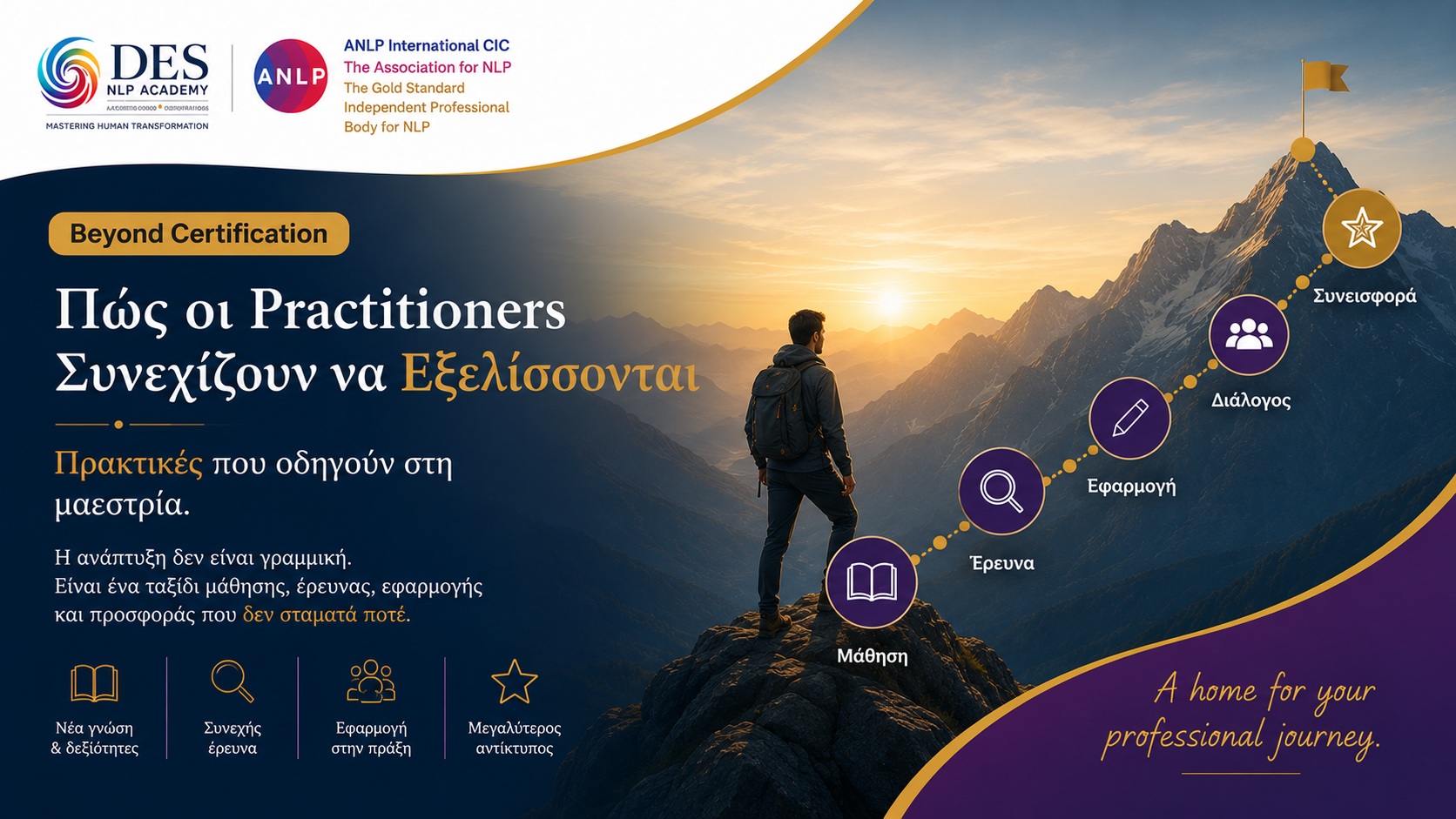
They read. Not only NLP books, but psychology, neuroscience, linguistics, philosophy. They treat the field as alive, not finished.
They follow the research. They know what evidence exists for what they do, where it is strong, and where it is honest about its limits. In a field as contested as ours, that is not optional; it is professional integrity.
They write. Case studies. Reflections. Articles. Writing demands a precision that no amount of practice can. The moment you try to explain your work to a colleague on paper, you discover what you really understand.
They stay in dialogue. Conversations with peers. Supervision. Mentoring: they receive it early and offer it later. Conferences where they listen to people who think differently.
They contribute. And here is the quiet secret: at some point, the fastest way to grow is to give. Teaching sharpens you. Publishing exposes you, creatively. Mentoring sends you back to first principles.
Notice what this list is: reading, research, writing, dialogue, contribution. And notice what it isn’t: another certificate.
Where does all this live?
Now, a fair objection: that all sounds great, but where do I find it? The books are scattered. The research sits behind journal subscriptions. Colleagues are busy. Conferences are somewhere abroad. Who has the infrastructure for all of this?
That question is exactly why professional bodies exist. Not to train you, but to give your development a home.
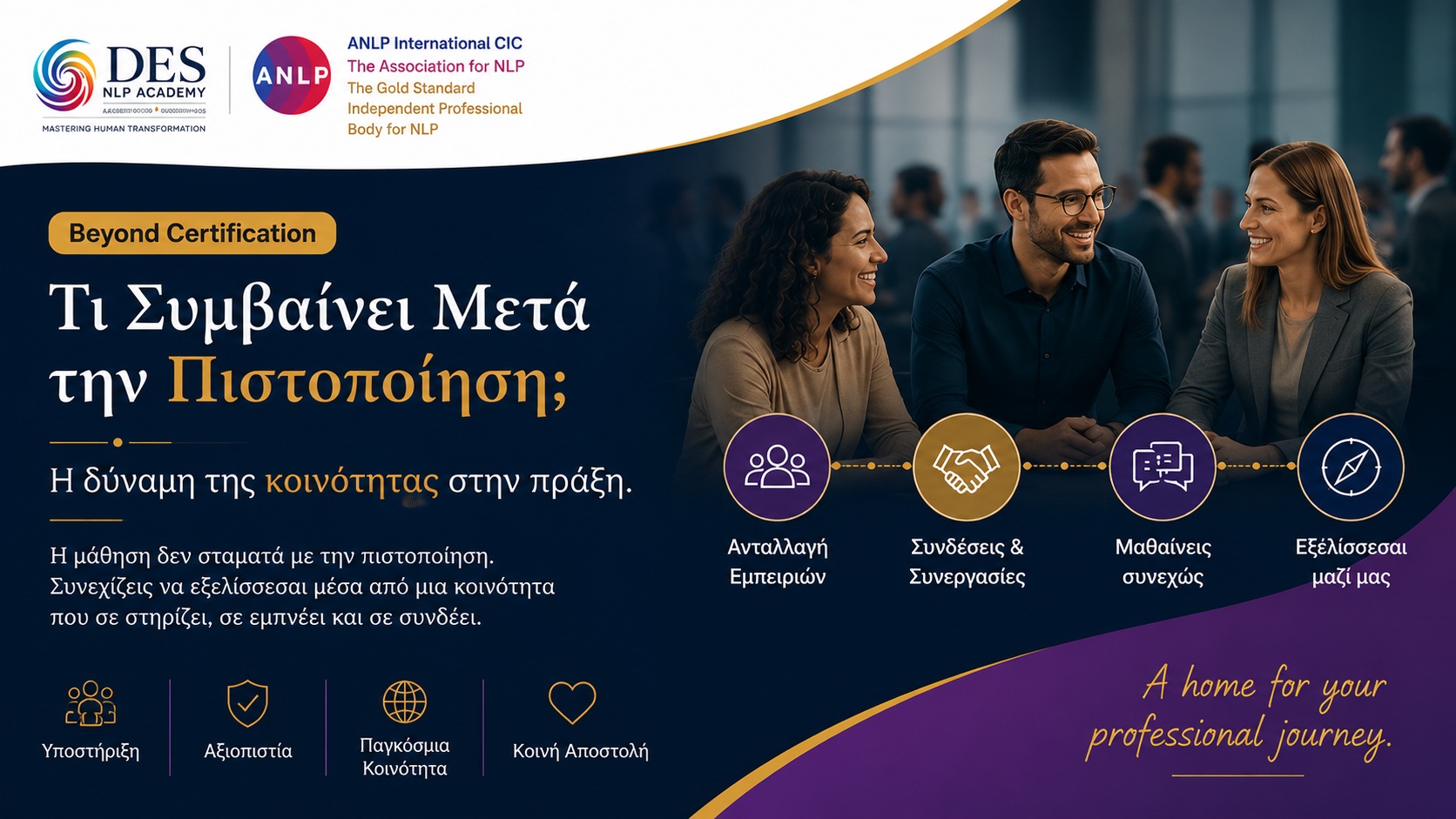
Inside ANLP, that infrastructure simply exists. Rapport magazine arrives every quarter with case studies and applied thinking from practitioners around the world, and it is also a place where you can publish, with editorial support for first-time writers. The association gathers NLP research and runs research initiatives our field urgently needs. Special Interest Groups bring together people in your speciality (business, education, therapy, coaching) in ongoing dialogue. CPD programmes turn “I should keep learning” into a real, recognised rhythm. International events, led by the NLP International Conference, put you in the same room as the people who write the books. And professional recognition (membership levels, accreditation, a public register) makes your development visible to the clients and organisations deciding whether to trust you.
I can speak to this personally. Writing and speaking within a professional community has developed me more in recent years than any seminar I could have attended. When you know colleagues around the world will read your case study, you think more deeply. When you present to peers, you prepare differently. Contribution is a mechanism that pushes you towards excellence.
The easiest first step
Of everything I have mentioned, the simplest place to start is to step inside and look around. You can explore ANLP membership at anlp.org/become-a-member. Read Rapport. Look at the research. Meet the international community. See the Code of Ethics and the professional framework for yourself. Then decide, fully informed, whether this is your professional home.
The shift
There is a moment in every serious practitioner’s journey (I have seen it many times, and I remember my own) when the central question quietly changes.
One day you stop asking: “Which seminar should I attend?”
And you start asking: “What can I offer my profession?”
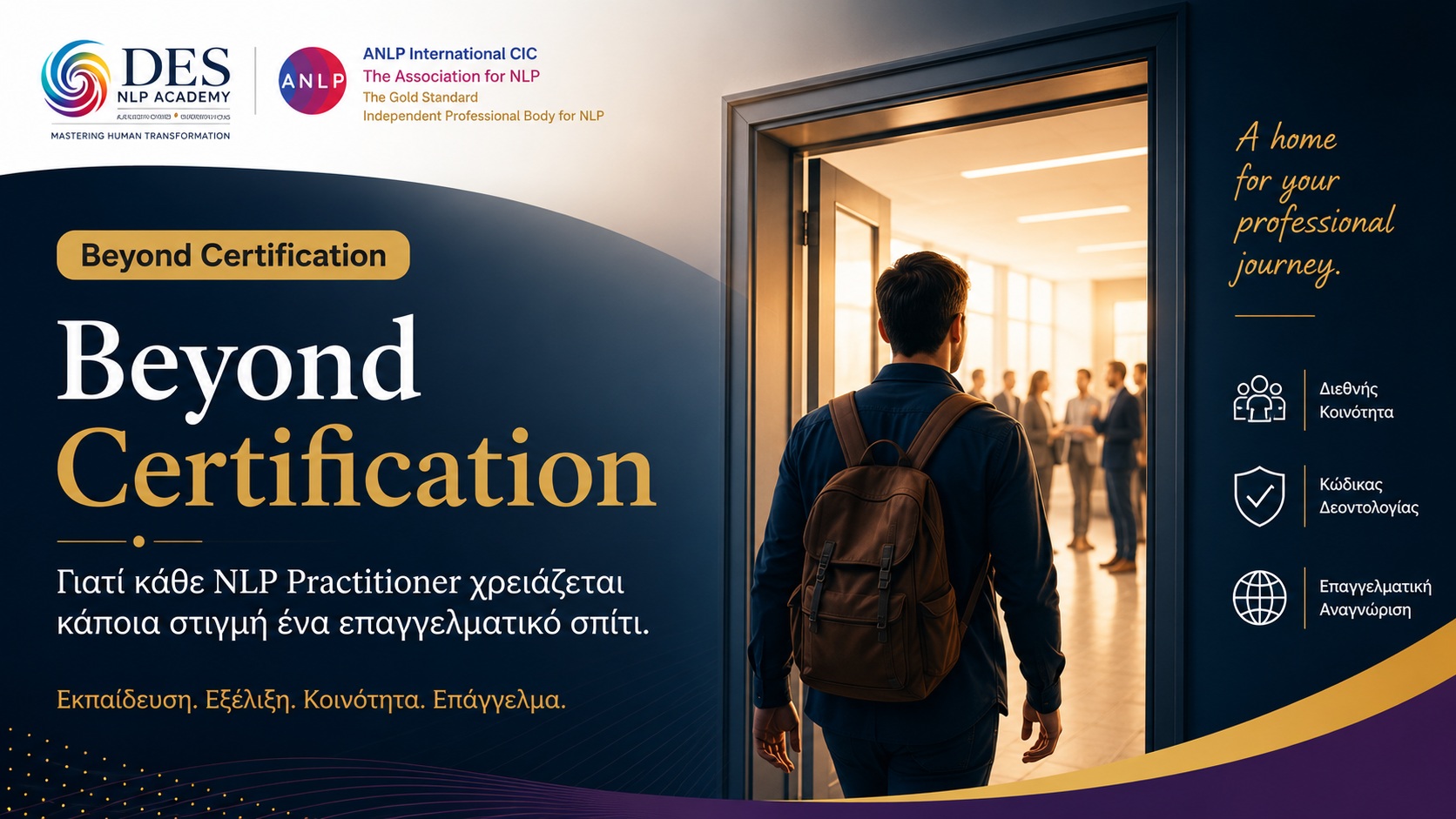
That question is the door. In the final article of this series, I want to show you what I believe lies on the other side of it for all of us, together. It is the article I most wanted to write.
No obligation. No small print. Just an open door. If you would like to talk it through, get in touch with us.
Nikolas Fragkias is a psychologist, behavioural analyst and executive coach, ANLP International Ambassador and INLPTA National Coordinator for Greece.